

Pressing play on your own pleasure
Something I have been quietly curious about

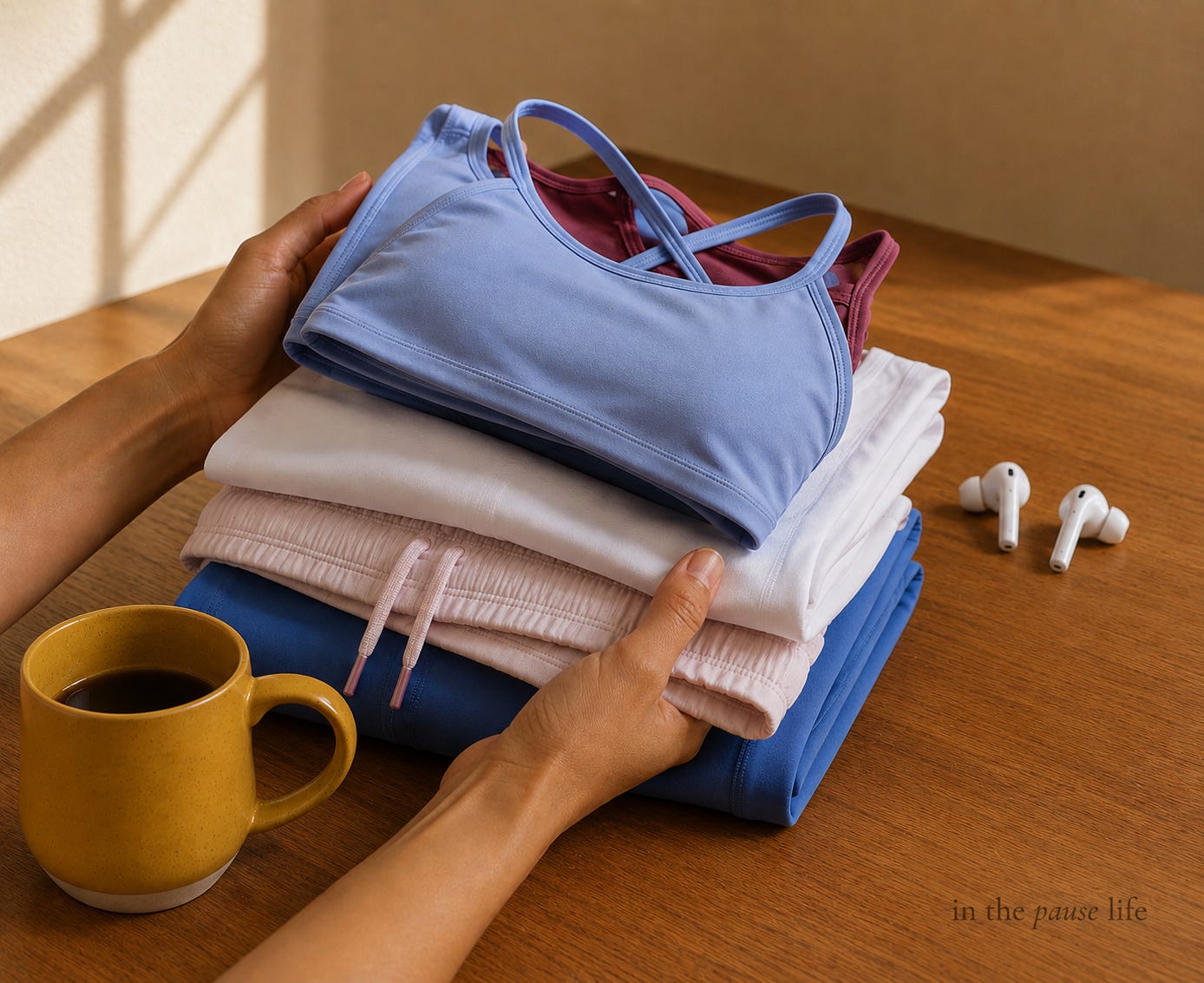
I was folding laundry when I pressed play.
That detail matters. I was not doing anything brave or intentional. A podcast had been sitting in my queue for two weeks. The earbuds were already in. I pressed play the way I press play on anything during laundry, without thinking too hard about it.
Except I stopped folding.
I was holding the same cream-colored shirt for maybe three minutes. Not folding it. Just holding it and listening to a woman talk about pleasure and midlife like it was a completely normal conversation to be having.
It felt like something I had been waiting to overhear.
The podcast is called Pleasure in the Pause. The host works as a pleasure coach specifically with women in perimenopause and beyond. Her premise is simple, and she does not apologize for it: pleasure does not have an expiration date.
I have heard versions of this before. The wellness world has been saying “reclaim your desire” for years, usually with something to purchase attached.
This felt different.
She was not talking about protocols or performance. She was talking about curiosity. The specific, quiet act of getting interested in your own body again: not to correct what is shifting, not to optimize anything, but to ask what it actually responds to now. In its current form. At this particular stage.
That is a different question than the ones I had been asking. I had mostly been asking: what is wrong, what is slower, what has changed. Those are real questions. They have real answers. But they only go in one direction.
A few days later, I found an audiobook on the same general territory: desire, the body, and why the map most of us were handed does not actually fit the terrain.
The premise is that desire is not a standard measurable thing that rises and falls like a hormone panel. It has a shape. The shape is personal. And the shape can change, not only diminish, over time. The book maps different ways bodies respond to desire and sensation. What one body finds electric, another finds overstimulating. What one person needs to feel open, another experiences as cold and clinical.
What stayed with me was not the specific framework, though it was interesting. It was the idea underneath it.
Maybe the problem was never desired. Maybe I had been using the wrong map.
Here is the thing nobody said out loud, at least not to me:
Some women in perimenopause and postmenopause report that the quality of pleasure actually improves. Not despite the hormonal shifts. Not because of a supplement. But because the performance pressure of younger years begins to release. Less to prove. More room to stay present inside what is actually happening, rather than managing what should be.
I read that three times.
I have spent more of the past two years thinking about what is leaving my body than what might still be available to it. The dryness. The slower arousal. The evenings when desire feels like a word from a language I used to speak fluently. Those things are real. I am not softening them.
But I had been carrying a map that only showed the losses.
Pleasure, it turns out, is broader than most of what I was taught.
It is not only one kind, or one context, or one shape. It is desire, sensation, closeness, the quiet satisfaction of feeling at home in a body that has done a lot of difficult work. It is slow and sometimes solo and sometimes just warmth and a good mug and the specific relief of not performing for anyone, including yourself. It is the particular pleasure of an evening that belongs to no one else.
It is also, apparently, still available. Not in the shape it took at thirty-five. In its current shape, which I am still learning to read.
That learning does not feel like a loss anymore. It feels like getting genuinely interested. In a body, I have spent years managing and very little time listening to.
That shift, from managing to listening, might be the whole thing.
I finished the laundry eventually. The shirt got folded.
But I kept the podcast in my rotation. I kept the audiobook going on slow Tuesday morning walks. And I kept returning to the question the host circles back to in almost every episode:
What does your body actually respond to now?
Not what it used to. Not what it should be. Not what your younger self could have answered without pausing.
What does it respond to today?
I do not have a clean answer yet. I think that might be the point. The question is not a problem to solve. It is something to stay curious about. Which, for a woman who has spent most of her adult life solving things, is its own kind of practice.
Curiosity is the first form of permission. And sometimes the question is the entire practice.
💛 If that landed somewhere, there are five small permission slips waiting at slips.inthepauselife.com. Not instructions. Five doors, left open for you.
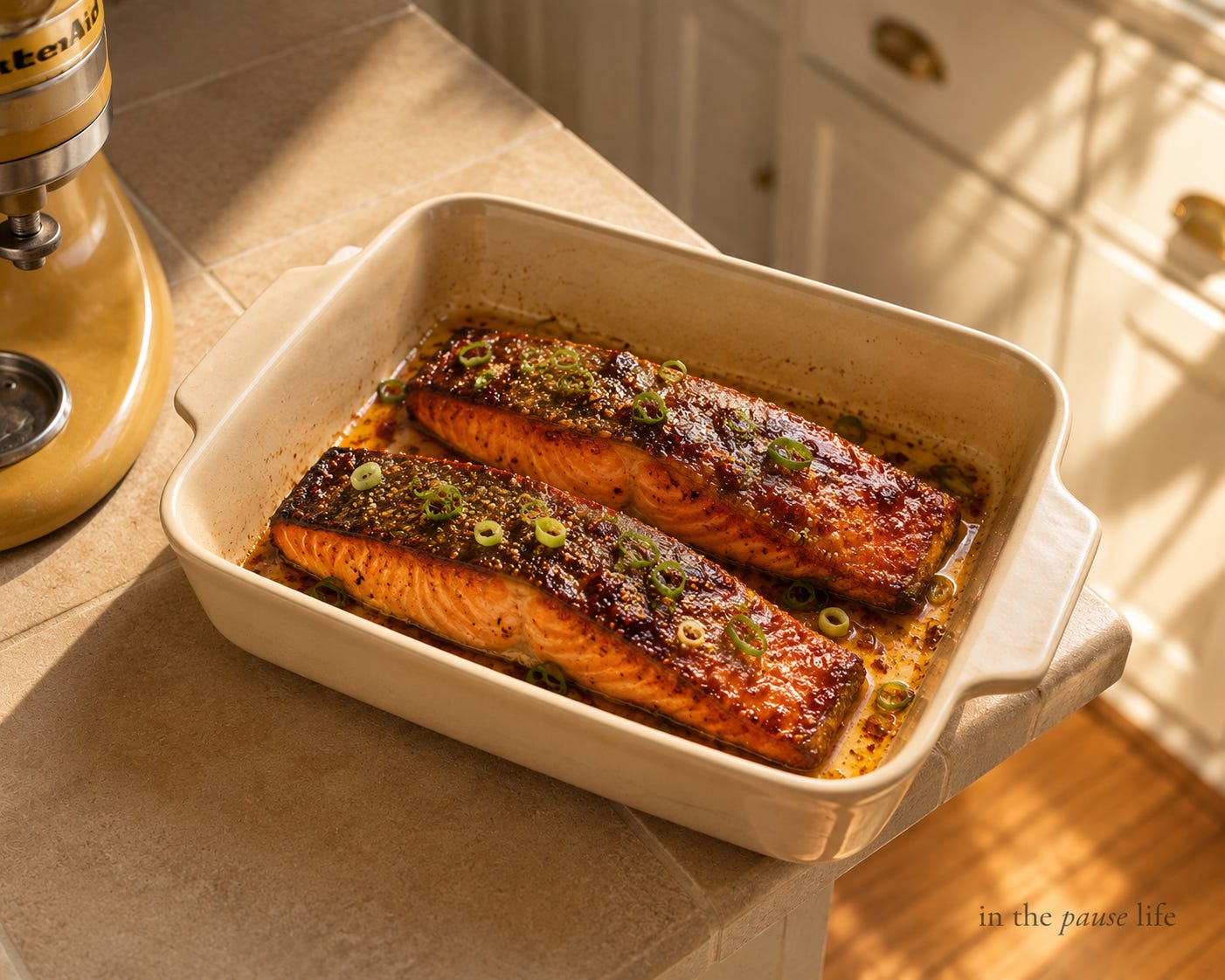
The Recipe: Miso Butter Salmon
Five minutes, one pan, thirty-five grams of protein. The kind of meal that feels like you did something genuinely kind for yourself.
Serves 2
Ingredients
2 salmon fillets
1 tbsp white miso paste
1 tbsp butter, softened
2 scallions, thinly sliced
½ tsp sesame oil
1 pinch salt
Steps
Prep the salmon. Pat fillets completely dry with paper towels and season all over with salt. Dry fish sears better. This is the one step most people skip.
Make the miso butter. Mix white miso and butter together in a small bowl until smooth. Set aside.
Sear. Heat a skillet over medium-high until hot. Place the salmon skin-side up and sear for 3 minutes without moving it.
Glaze and finish. Flip the salmon. Spread the miso butter evenly over the top of each fillet. Cook 2 more minutes until the glaze caramelizes at the edges, and the center is just barely set.
Plate. Slide onto a plate and finish with scallions and a few drops of sesame oil. Serve immediately.
Serve over rice, wilted greens, or just on its own with a good fork and nowhere to be.
💛 Notes from the Pause
Salmon is one of the most concentrated omega-3 sources available. Those fatty acids support mood regulation, reduce inflammatory markers, and help maintain cognitive function through the hormonal shifts of perimenopause and menopause. This is not a supplement. It is dinner.
White miso is a fermented food that contributes to the gut microbiome, which is increasingly understood to influence mood, hormone metabolism, and how the body processes estrogen during the Pause. Fermented foods earn their place at the table.
Protein at dinner (this meal delivers approximately 35 grams per serving) supports muscle maintenance and sleep quality, both of which shift in midlife and respond well to consistent, adequate protein spread across the day.
The scallions and sesame oil are not incidental. They are flavor, and flavor matters. A meal you genuinely want to eat is the one that actually nourishes you. The Sunday morning test applies here: yes.
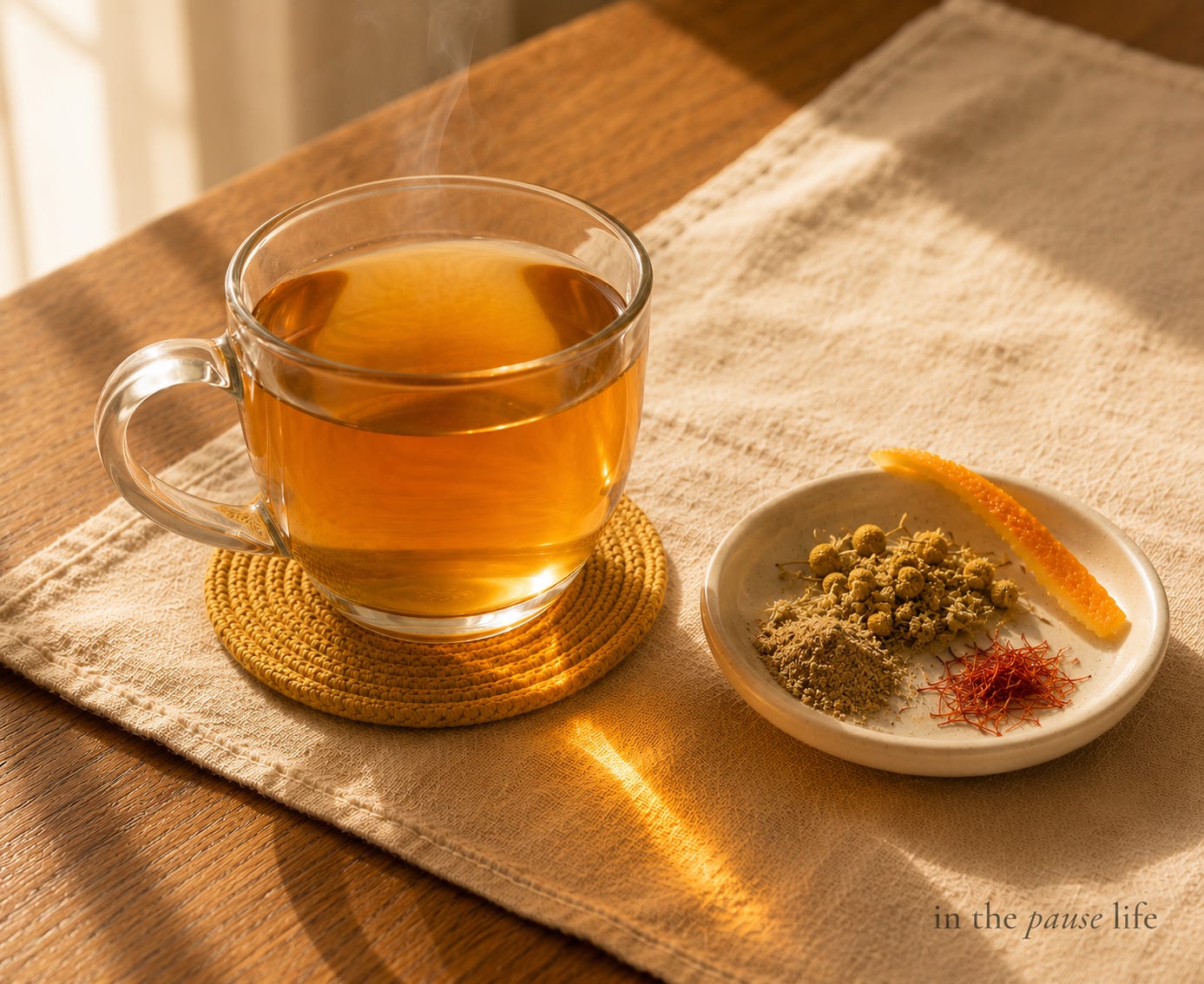
The Sip: The Slow Gold
Saffron and cardamom herbal tea
Yield: 1 cup
Ingredients
15 saffron threads (a small pinch)
1 tbsp warm water, for blooming
1 small chamomile tea bag, or 1 tsp loose dried chamomile
¼ tsp ground cardamom
1 cup water, just off the boil (around 200°F)
1 tsp honey (optional)
1 small strip orange peel (optional, for finish)
Steps
Bloom the saffron. Place saffron threads in a small bowl and pour the warm water over them. Let it sit for 5 minutes, until the water turns deep, luminous gold. This step unlocks the color, the fragrance, and the active compounds. Do not skip it.
Steep the chamomile. Pour the just-off-the-boil water over the chamomile in your mug. Steep for 4 minutes, then remove the tea bag or strain the loose herbs.
Build the cup. Pour the bloomed saffron water directly into the steeped chamomile. Add the cardamom and stir gently. The tea will turn a warm, soft amber, the color of late afternoon in a good kitchen.
Sweeten if you like. Add honey and stir. Drop in the orange peel if using. It brightens the whole thing without competing.
Sit down before you drink it. This one is not for standing at the counter.
💛 Notes from the cup
Saffron carries some of the strongest clinical evidence among herbs for mood support and reduction of hot flash frequency in perimenopausal and postmenopausal women. What matters more than quantity is consistency. Two weeks of nightly use is when most women begin to notice a difference.
Chamomile is gentle on the nervous system and one of the most well-studied herbs for sleep preparation. Paired with saffron, this cup does double work: mood steadying and sleep support, without disrupting the architecture of the night.
Cardamom supports digestion and blood sugar stability, both of which shift during hormonal transition. It also makes this tea smell like something worth making deliberately.
The bloom step matters. Saffron’s active compounds are released through heat contact with liquid. Steeping the threads directly without blooming first gives you the color but less of everything else. Five minutes is enough.
There is a particular kind of evening this tea belongs to. The kind that has given too much already: to the work, to the list, to the low-grade mental tracking that never actually stops.
When the saffron hits the chamomile and the cup goes amber, the kitchen smells like something warm and slightly unfamiliar.
Something a little ceremonial. You did not plan for it. You just made the tea. That counts.
You do not have to be finished with the day to deserve the cup. You do not have to have earned it or resolved anything.
The warmth in both hands is enough of a reason to sit down.
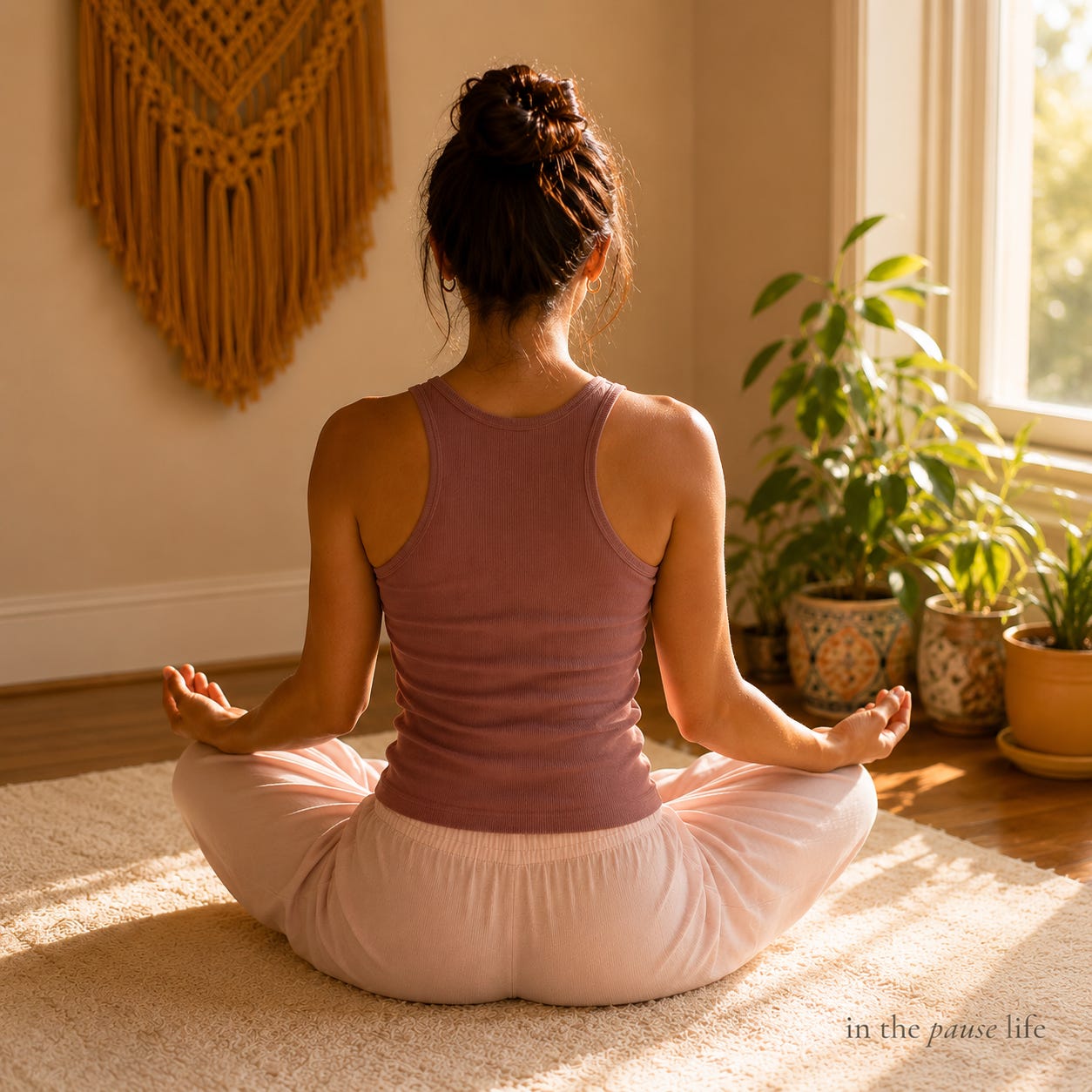
The Movement
A body check-in. Not a workout.
Find somewhere quiet to sit or lie down. Take three slow breaths, each one a little longer than the one before.
Then ask, without expecting to answer: what is my body actually signaling right now? Not what it should need. Not what you want it to need.
What it is actually doing: where the tension is, where the tiredness lives, what it is asking for in this specific hour.
Stay with that for two minutes. No fixing. No responding. Just noticing what is there.
The noticing is the practice.
In midlife, when the body is shifting in ways that can feel unpredictable or unfamiliar, learning to listen before you react builds something.
Not a solution. A relationship. Between you and the body you are living in, which is the only one you have, and which is doing more than you usually give it credit for.
The Home Touch
Make the evening hour yours.
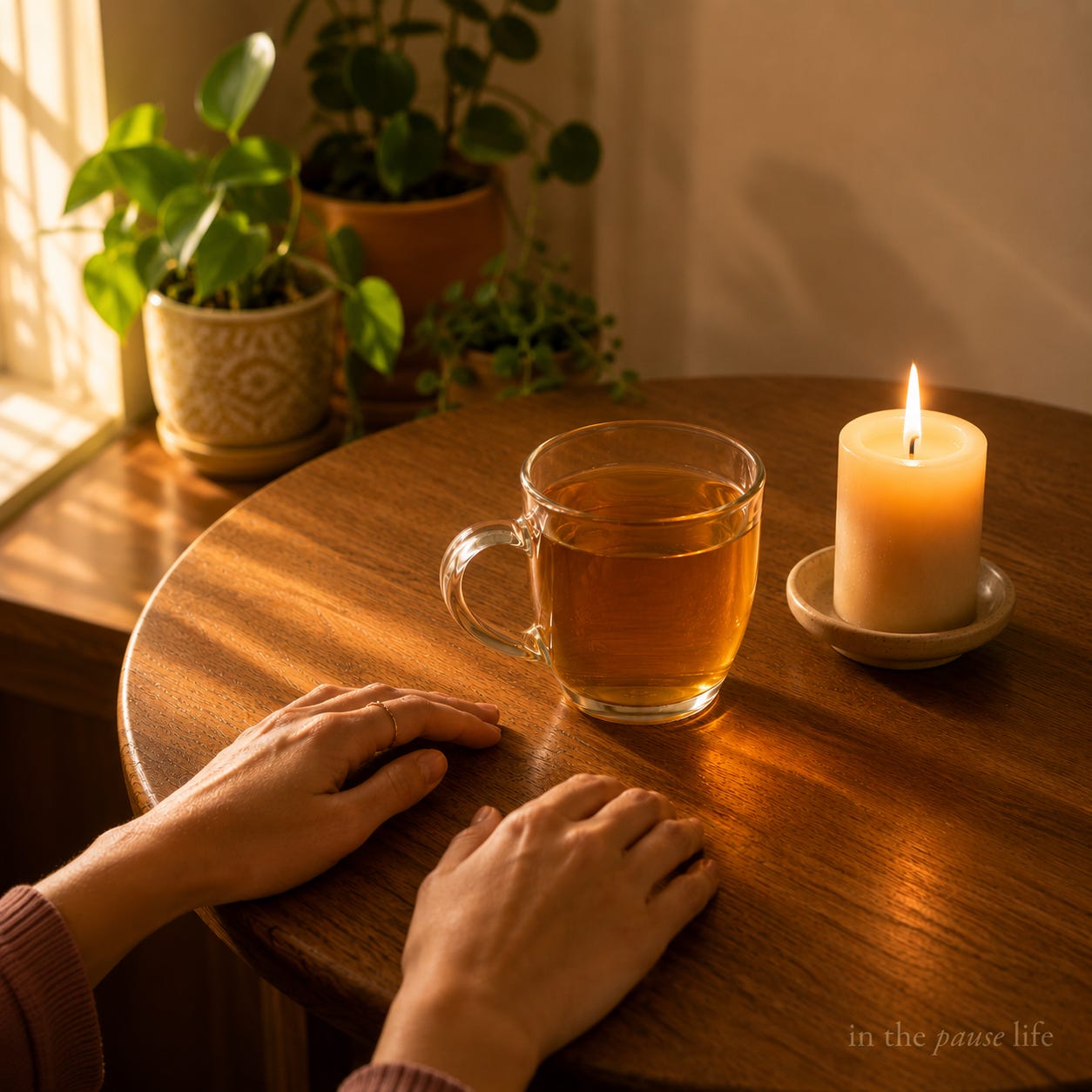
Pick one evening this week and set the table for yourself before dinner starts: the good cup set out for the Slow Gold, a candle lit, the playlist that softens the room.
The act of making the five o’clock hour intentional, something that belongs to you rather than the scramble between work and dinner, is its own small, legitimate form of pleasure.
It takes about three minutes to arrange. It changes the whole shape of the evening.
In The Pause Life arrives every Friday. Written for women in perimenopause, menopause, and postmenopause. Slow, warm, true.
In the pause with you,
Tew Green
In The Pause Life
Transition·Tend·Strengthen·Savor·Become